What Is a Kill Pen, and What Does “Bail” Really Mean?
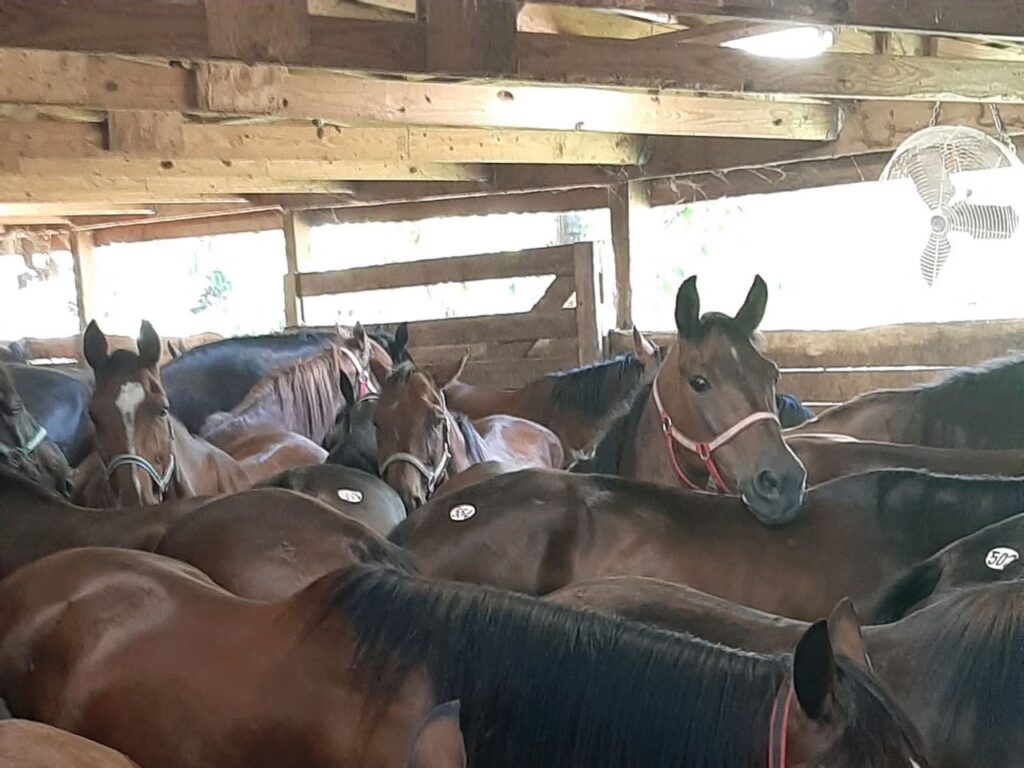
A photograph appears online. A horse stands behind a metal gate with a number attached to the post. The description includes a price, a deadline, and a warning that the horse will “ship” if enough money is not raised.
The appeal is designed to create an immediate emotional response: Donate now, ask questions later.
The horse may genuinely be at risk. However, the words kill pen, bail, ship date, and deadline do not, by themselves, tell donors who owns the horse, where the money is going, or what will happen next.
Understanding those distinctions does not mean turning away from horses in danger. It means making sure our compassion does not finance the same system we want to change.
What Is a Kill Pen?
“Kill pen” is commonly used to describe a location where horses believed to be at risk of entering the slaughter pipeline are held. It may be a dealer’s property, broker lot, feedlot, livestock yard, or another holding facility.
However, “kill pen” is not a uniform federal legal classification.
Federal regulations governing the commercial transportation of equines for slaughter use terms such as feedlot, stockyard, owner/shipper, and slaughtering facility. USDA documentation records information such as the auction or market, owner or shipper, loading location, vehicle, horse identification, and intended destination.
A facility may be involved in the slaughter trade, but calling it a kill pen does not establish the legal status or destination of every horse located there.
The Participants Are Not All the Same
Online terms are often treated as if they mean the same thing. They do not.
Auction: A venue where horses are sold to the highest bidder. Auctions may attract private buyers, trainers, rescues, dealers, brokers, and kill buyers. A horse’s presence at an auction does not automatically prove that the horse was destined for slaughter.
Dealer or trader: A person or business that buys and sells horses for profit. Some specialize in riding horses, some supply other dealers, and some participate in several parts of the market.
Kill buyer or slaughter buyer: A buyer who purchases horses for resale into the slaughter channel or acts as an agent or supplier for that trade. The term is also used loosely online, so the person’s actual business practices matter more than the label.
Broker or reseller: An intermediary who markets horses owned by the broker, a dealer, or another party. Some brokers offer horses to the public at prices above their auction or meat-market value.
Holding facility, broker lot, or feedlot: A physical location where horses are gathered, sorted, marketed, conditioned, or held. The location name alone does not prove each horse’s intended destination.
These roles can overlap. One operator may buy some horses for public resale, move others between dealers, and assemble others for slaughter shipment. That complexity is exactly why donors should ask for documentation instead of relying exclusively on social-media language.
What Does “Bail” Mean?
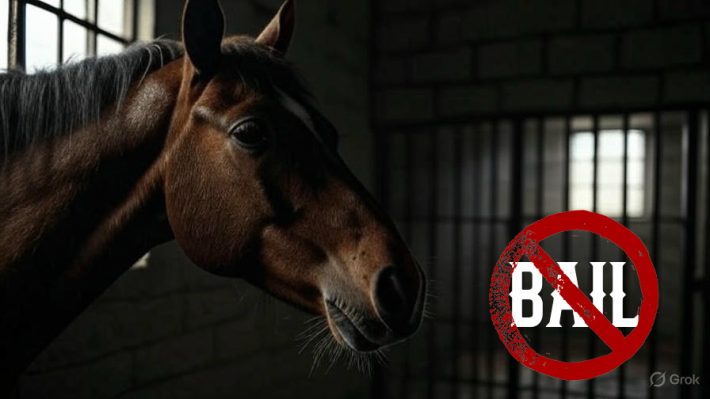
In criminal law, bail secures a person’s release from custody. In kill-pen fundraising, “bail” is marketing or fundraising terminology.
It is not a special legal status attached to a horse.
In most cases, money described as bail is actually a purchase price, release price, broker price, or fundraising target. Paying it creates a commercial transaction. The donor may be helping a rescue purchase the horse, helping an individual acquire it, or paying a seller directly.
Before donating, ask:
- Who currently owns the horse?
- Who will receive the payment?
- Who will own the horse after payment?
- Is the stated amount the seller’s price or a rescue’s fundraising goal?
- Does it include transportation, quarantine, veterinary care, or boarding?
- What happens to donations if the horse is sold, shipped, withdrawn, or funded by someone else?
- What happens to money collected above the stated amount?
Without those answers, donors cannot know what their contribution is purchasing.
What Does the Deadline Prove?
A deadline can be real and still fail to tell the whole story.
It may refer to a scheduled shipment, required pickup date, resale date, end of included board, space limitation, or fundraising cutoff. It may also be extended or replaced with another deadline.
A deadline should therefore be treated as a claim that requires context, not as independent proof that a specific horse will be slaughtered at a particular time.
Donors should ask:
- Who established the deadline?
- What event is scheduled to occur on that date?
- Is there documentation supporting the stated destination?
- Will the horse be shipped, resold, moved to another lot, or charged additional board?
- Has the deadline previously changed?
- Is money being collected by more than one person or organization?
Urgency may be warranted, but urgency should never eliminate accountability.
Saving One Horse and Funding the System
This is the hardest part of the discussion because two things can be true at once.
A horse may be in genuine danger and deserve immediate help. At the same time, paying a profitable public resale price may provide the seller with money to purchase additional horses.
The individual horse is visible. The next horses purchased with the proceeds are not.
This does not mean the rescued horse was undeserving. It means donors should distinguish between helping one animal and reducing the system’s capacity to place more animals at risk.
A successful fundraiser should not be measured only by whether the purchase price was raised. Responsible rescue also requires transportation, quarantine, veterinary evaluation, farrier care, appropriate feed, rehabilitation, training, legal ownership, and a realistic long-term placement plan.
The purchase is often the least expensive part of the horse’s recovery.
What Transparency Should Look Like
A rescue or fundraiser asking the public to help should be prepared to disclose:
- The horse’s verified identity and location
- The current legal owner or seller
- The amount being paid to acquire the horse
- The recipient of the funds
- Any relationship between the rescue, fundraiser, broker, or seller
- Transportation and quarantine arrangements
- The initial medical and behavioral plan
- The organization’s current population and capacity
- The total amount raised
- How excess or unused funds will be handled
- The horse’s eventual outcome
Transparency should continue after the dramatic rescue appeal ends. Donors deserve to know whether the horse entered quarantine, received veterinary care, remained with the organization, transferred elsewhere, became adoptable, was adopted, entered sanctuary, or was humanely euthanized.
Not every rescue story ends happily. Honest organizations report difficult outcomes as well as successful ones.
How Donors Can Make a Greater Impact
The choice is not simply “pay the bail” or “do nothing.”
Donors can support programs that intervene before horses enter the commercial pipeline:
- Owner-surrender and direct-placement programs
- Temporary hay, veterinary, dental, or farrier assistance
- Safe rehoming and foster networks
- Quarantine and rehabilitation programs
- Training that improves adoptability
- Gelding and responsible-breeding initiatives
- Humane euthanasia assistance
- Accredited rescues with documented capacity and outcomes
- Legislative efforts to end the transport of American horses for slaughter
These programs may not produce the same dramatic countdown photograph, but they can prevent horses from reaching that point in the first place.
Follow the Horse. Follow the Money. Verify the Claim.
Thoughtful giving is not a lack of compassion. It is compassion paired with accountability.
Before donating, follow the horse. Determine who owns the horse, where it is located, and where it will go.
Follow the money. Determine who receives it, what it pays for, and whether the transaction financially supports the seller.
Verify the claim. Ask what the deadline represents and what documentation supports the advertised circumstances.
Every horse deserves safety, humane care, and an honest chance at a secure future. Donors deserve truthful information about what their money supports.
The goal should not be to become better at repeatedly buying horses out of the pipeline. The goal should be to reduce the number of horses entering it.
Sources and Further Reading